bell hooks:
People may be surprised to know how much bell hooks loves men–especially black men–but she does.
I say surprised, because the general tendency–especially among men–is to confuse feminist politics and political activism with being anti-men.
So if you couple this tendency (to conflate feminist politics with being anti-men) with the undeniably harsh realities that confront black men in America, then it is easy to see how decades of political activism to teach and educate about patriarchy and sexism in the lives of black folks could cause some people to view bell hooks as being anti-black men.
But nothing could be further from the truth.
In fact, a very important part of bell hooks’ intellectual and political project over the years has been to create spaces for men–especially men of color–to do the critical work of examining masculinities and sexualities.
On the one hand, black feminist scholars and activists have always had to point out the systematic advantages that black men have in relation to black women. On the other hand, not many have taken the time to dedicate an entire book to exploring the complex issues that black men face in America.
Yet, this is precisely what bell does in her book We Real Cool: Black Men & Masculinity.
But she does expect men to be part of the movement. In her essay, “Men in Feminist Struggle–The Necessary Movement” she points out the limitations of traditional feminist theory in it’s inability to engage and re-conceptualize masculinity, and she talks passionately about her “deeply felt conviction” that men must play an active role in feminist struggle.
Saturday, January 19, 2013


Mudede on Scott on first contact
Charles Mudede on local filmmaker Shaun Scott's Seat of Empire
"Scott claims that it was more of an interaction, a mutual exchange of ideas, values, codes, goods, and bodily fluids."
I wonder if it's John Wayne-Sherman Alexie style fluid swapping or Disney Pocahontas/Dance with Wolves type fluid swapping (is there a difference?)
"When one group meets another, both are transformed by the experience. The pioneers did not just impress their culture on the locals and the landscape, but were changed by both into something new, something other than what they were to begin with. There is no purity, just mixture—Scott is committed to this position."
Check out this clip on the World's Largest Brothel:
Also cf. a Lacanian analysis of the Alexie story, "The entire story of John Wayne and Etta revolves around the logic of symbolic identification and of enjoyment that Zizek describes in 'The Loop of Enjoyment' in Tarrying With the Negative. Both Native American and European in this story are cautious about one another’s culture. The Other – for the European, the Native American, and for the Native American, the European – occupies a space of desire outside one’s own community, a space that is fantasmatic and characterized by either excessive fear and alienation or excessive pleasure. Zizek indirectly describes perfectly John Wayne’s fascination with Etta as the Native, and perhaps even her own fascination with John Wayne. They are fascinated with each other as an Other, and at the same time, they feel threatened by their very fascination for each other, as though they were violating their own tribal-national-ethnic identity (Zizek 203)."
Sunday, December 23, 2012
Multi-ethnic leading ladies of the cinema
Yeah boy this is why I like the 80s and 90s
http://en.wikipedia.org/wiki/Dorothy_Dandridge#Legacy
Many years passed before the entertainment industry acknowledged Dandridge's legacy. Starting in the 1980s, stars such as Cicely Tyson, Jada Pinkett Smith, Halle Berry, Janet Jackson, Whitney Houston and Angela Bassett acknowledged Dandridge's contributions to the role of African-Americans in film.
In 1999, Halle Berry took the lead role of Dandridge in the HBO Movie Introducing Dorothy Dandridge, which she also produced and for which she won an Emmy Award, a Golden Globe Award and a Screen Actors Guild Award. When Berry won the Academy Award for Best Actress for her role in Monster's Ball, she dedicated the "moment [to] Dorothy Dandridge, Lena Horne, Diahann Carroll." Both Dandridge and Berry were from Cleveland, Ohio.
For her contributions to the motion picture industry, she was given a star on the Hollywood Walk of Fame, at 671 Hollywood Boulevard.
Dorothy Dandridge has a statue at Hollywood-La Brea Boulevard in Los Angeles, designed by Catherine Hardwicke built to honor of multi-ethnic leading ladies of the cinema together with Mae West, Dolores del Rio and Anna May Wong.
Check it-- Dorothy in white and orangey-brown?
Marketed for different audiences i.e. black and white??!

Where my multi-ethnic leading ladies today?!
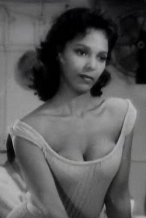


This will do for now.
http://en.wikipedia.org/wiki/Dorothy_Dandridge#Legacy
Many years passed before the entertainment industry acknowledged Dandridge's legacy. Starting in the 1980s, stars such as Cicely Tyson, Jada Pinkett Smith, Halle Berry, Janet Jackson, Whitney Houston and Angela Bassett acknowledged Dandridge's contributions to the role of African-Americans in film.
In 1999, Halle Berry took the lead role of Dandridge in the HBO Movie Introducing Dorothy Dandridge, which she also produced and for which she won an Emmy Award, a Golden Globe Award and a Screen Actors Guild Award. When Berry won the Academy Award for Best Actress for her role in Monster's Ball, she dedicated the "moment [to] Dorothy Dandridge, Lena Horne, Diahann Carroll." Both Dandridge and Berry were from Cleveland, Ohio.
For her contributions to the motion picture industry, she was given a star on the Hollywood Walk of Fame, at 671 Hollywood Boulevard.
Dorothy Dandridge has a statue at Hollywood-La Brea Boulevard in Los Angeles, designed by Catherine Hardwicke built to honor of multi-ethnic leading ladies of the cinema together with Mae West, Dolores del Rio and Anna May Wong.
Check it-- Dorothy in white and orangey-brown?
Marketed for different audiences i.e. black and white??!
Where my multi-ethnic leading ladies today?!
This will do for now.
Tuesday, December 4, 2012

leave it to these folks to figure this out. BLECH!
From Wikipedia:
The American Indian Studies Center of the University of California, Los Angeles – whom No Doubt claimed to have consulted prior to filming the video – released an open letter to No Doubt which noted "perceptions that American Indians are mere historical relics, frozen in time as stereotypically savage, primitive, uniquely-spiritualized and – in the case of Native women – hyper-sexualized objects to be tamed" and said the video "is replete with such highly offensive and destructive images of Native peoples in general and Native women specifically" and that is was "rife with imagery that glorifies aggression against Indian people, and, most disturbingly, denigrates and objectifies Native women through scenes of sexualized violence" but commended the band's decision to remove the video.
Note the UCLA AISC parts that Wikipedia (conveniently?) left out (Also the fact that nobody at the Center was contacted to their knowledge by No Doubt:"We also want to make clear that, while No Doubt’s apology claimed to have consulted “Native American studies experts at the University of California,” to our knowledge, no such person from UCLA was consulted about the video prior to its release." I smell a fib!):
Most importantly, however, the video is rife with imagery that glorifies aggression against Indian people, and, most disturbingly, denigrates and objectifies Native women through scenes of sexualized violence. Much like the 19th century paintings advancing the ethos of manifest destiny1 – the belief that the United States was destined to expand across the continent, bringing civilization and light to a primitive people – the video draws on familiar tropes of the conquest of the continent and, concomitantly, the ravage of the Native female. As lead singer Gwen Stefani writhes, partially dressed (as an Indian) and shackled in ropes while overseen by domineering white men brandishing pistols, today real Native American women in the United States are in a state of crisis.
In Indian country today, Indian nations may not criminally prosecute non-Indians who commit crimes in Indian country, including violent crimes against Native women and girls. In the United States today, approximately one in three American Indian and Alaskan Native women will be raped in their lifetimes. A recent Amnesty International report, “Maze of Injustice,” details the barriers Indian women face in accessing adequate justice systems when they are the victims of violent crime. Additional research studies indicate that certain crimes – such as the rape of Indian women, for example – are primarily perpetrated by non-Indian men. And all American Indians experience victimization from violent crimes at rates more than twice the national average.
Also cf. No Doubt's love of bindhis in the '90s and cute Asian ladies: "oh if I could only climb a pretty white lady's blonde hair, how sweet of an escape from my imprisonment as a sidekick and exotic fashion accessory that would be, not to mention even a magical negro (in this case Akon), a la Rick Astley!"
p.s. Thank you, God, via Bobby Lee, for this wonderful thing. That's all there is to say.
http://www.youtube.com/watch?v=WQp9PQm5Q3A
Thursday, November 8, 2012

the eminent james baldwin at NAAM
Sedat Pakay on Baldwin: "He was strong in his convictions but poetic in his approach to life's joys and difficutlies. Years later I read that he was called the poet of the civil rights movement. The poetry was apparent in his writing as hew as inspired by the words of the New Testament when he preached at Harlem churches as a young man and also stemming from the articulate intelligence he possessed."

check it out at naamnw.org.
Subscribe to:
Posts (Atom)