Friday, April 27, 2012

Hairy :*(Boo) Who

One of my favorite paintings owned by the Henry Art Gallery.  I asked Gladys Nilsson for permission to reproduce it for my upcoming wedding, and got rejected.  Sad times.


Here's her and her husband artist Jim Nutt in 1961:
 
& 50 years later, still married!  .

Wednesday, April 25, 2012

Stephen Waddell

The frontispiece to Hunt and Gather reads:

"Before trying to isolate the epic quality of modern life and to show, by giving examples, that our age is no less rich than ancient times in sublime themes, it may be asserted that since every age and every people have had their own form of beauty, we inevitably have ours..."

-Charles Baudelaire, "Salon of 1846"

I love all the pictures of people looking away and in mid-action and the way he frames his pictures.

Tuesday, February 7, 2012

nice, NBA! Not nice, Ivies!

Although I don't care about sports I do care about discrimination and fair racial representation of Taiwanese brothers like Jeremy Lin:
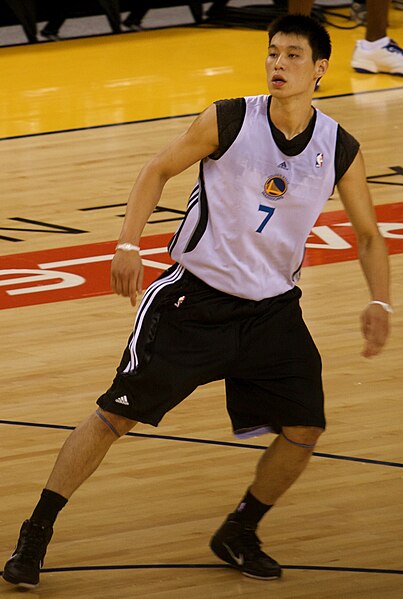

Lin's high school coach, Peter Diepenbrock, said that people without meaning any harm assume since Lin is Asian that he is not a basketball player. The first time Lin went to a Pro-Am game in Kezar Pavilion in San Francisco, his coach said, someone there informed him: "Sorry, sir, there's no volleyball here tonight. It's basketball."During Lin's college career, fewer than 0.5% of men's Division 1 basketball players were Asian-American.
Lin has regularly heard bigoted jeers at games such as "Wonton soup", "Sweet and sour pork", "Open your eyes!", "Go back to China",<--I've heard that one before. "Orchestra is on the other side of campus", or Chinese gibberish. Lin says this occurred even at most if not all Ivy League gyms. He does not react to it. "I expect it, I'm used to it, it is what it is," says Lin. The heckling came mostly from opposing fans and not as much from players. According to Harvard teammate Oliver McNally, a fellow Ivy League player did once call Lin a "chink".
(Is that surprising?)


In January 2010, Harvard played against Santa Clara University at the Leavey Center, just 15 miles from his hometown of Palo Alto, California. Playing to a capacity crowd that included droves of Asian Americans wanting to see his homecoming, his teammates told him, "It was like Hong Kong."
Lin considers himself a basketball player more than just an Asian American. He understands that there have not been many Asians in the NBA. "Maybe I can help break the stereotype," said Lin. Asian Americans who had played in the NBA prior to the 2010–11 NBA season include Wataru Misaka, Raymond Townsend, Corey Gaines, Rex Walters, and Robert Swift. "[Lin's] carrying the hopes of an entire continent. I only had to carry the hopes of Little Rock, Arkansas. He's accomplished a lot more than I have already," said Derek Fisher, who had won five NBA championships with the Lakers, after his first game against Lin.[45] Lin is setting an example for prospective Asian athletes in America who rarely see Asian-Americans playing on their favorite teams. "I don't look Japanese," Walters said, referring to his mother's ethnicity. "When they see [Lin], it's an Asian-American.

article

Monday, February 6, 2012

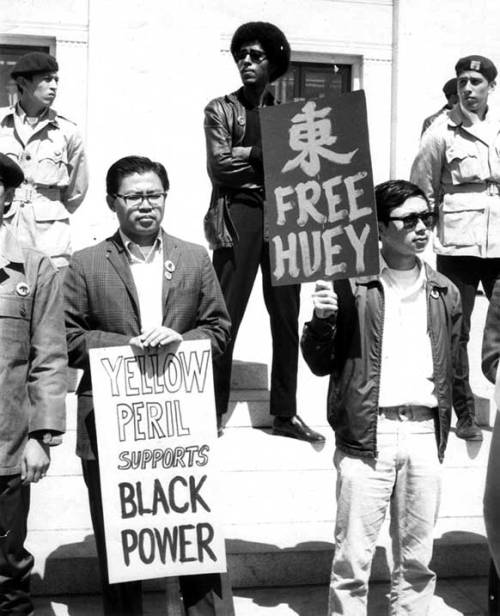
hope, diversity, adversity, adversaries, isolation, segregation, expansionist historiography, etc.

hope for the present...


without forgetting the past. Props to Beebe for sharing the cuteness with me~and with this website, and all those in the region involved in the struggle, like my great uncles and great aunts who settled in this beautiful region in a not-so-halcyon-for-minorities-past.


From here:


"...The Seattle Civil Rights and Labor History Project sought to use a 'long civil rights movement' framework to tell Seattle’s civil rights movement history online. From the beginning, we imagined that it would be a history that would range from the 1930s to the 1970s, rooted in the local history of everyday people’s struggles for jobs and freedom. That we conducted our work in Seattle meant that we would also inevitably shine a light on the fact that both racial segregation and movements against it in the U.S. West tend to be issues that go beyond black-white politics, and also include Latino/a, Asian American, and even urban Indian history."

Thursday, February 2, 2012

Cecil Taylor

"You really have to struggle, to fight. For example, they want you to accept that Africa has been a dark continent, that there was no civilization. This makes your body die. But then you start to read and you discover how people put history wrong. For me this meant a very important process of learning. Your art becomes your evolution. It tells you that there is something else, another reality: the immaterial. This opens up certain things, and might lead to the fact that the breath of your poetic visions becomes more beautiful.

The exploration of history is a spiritual process, in order to be able to judge one's self."
-Cecil Taylor

Wednesday, February 1, 2012

Saturday, January 7, 2012

just spicy enough

One thing American-born Asians and Latinos share in terms of racial assumptions made about them is that they definitely speak a different language (and get accosted by people who want to talk about and emphasize this magical otherness). This SNL sketch captures well how I think Hollywood deals with it:


Ethnic, but not TOO ethnic, because then it'd be weird!, i.e. Working from within racial stereotypes and sticking to the stereotypes ("Aiyaiyai!").